Saturday, March 13, 2021

High Capacity for Ecological Ruin

 It's a sunny Friday afternoon and this rock of anxiety that has been sitting on my chest all week as the new Environment Minister, Stephen Myers, has bullied and forced his will on our PEI ecology with a certain disgusting kind of joy. So I do what makes me feel better. Write a pointed letter. 


"I’m writing today as a farmer in the Wilmot and Dunk River watershed. We farm 550 acres smack dab in the middle of the potato belt. In the last few years: 

  • we’ve witnessed several new 'ponds' within a 2km radius of our farm (4 in the last 6 months), in addition to the ones built prior to that. 
  • We’ve had the land around and beside us bought up by the devious workings of lawyers and the ineffective enforcement of the Lands Protection Act. 
  • The stream that we fish and play in and was pumped below safe levels after the approval of our government representatives during a severe drought this past summer. 
  • The hedgerows that hold the snow and cut the wind, and the wooded areas that serve as wildlife habitat and corridors have been decimated and removed at incredible rates to make way for larger fields and bigger, heavier equipment.


Premier King & Minister Myers, it is at your own political peril to let the lobbyists and CEO’s of food corporations convince you that the naysayers are merely a handful of pearl-clutching protesters who hold no influence. We live here and visibly witness the continued disregard for the ecology of this area, because the policies to protect it are either ineffective or non-existent. Our livelihood as farmers is threatened not by the climate as much as it is by weak leadership that makes it possible, and even paves the way for an exploitation of our natural resources and landscape. 


The rising tide of land clearing, holding ponds, shady land deals, high capacity wells and a dismissal of public concerns is making for some very strong swimmers and we will not be drowned by your turning a blind eye and reminding us that we’re not the boss, as our newest Minister of the Environment is all too happy to share. 

A change in tone, a backbone and some policy with teeth (and shorter deadlines) would go a long way in ensuring not only a longer political career, but healthy soil, air and water for Prince Edward Islanders."


Saturday, March 6, 2021

The Ageless Octogenarian

 My strong-willed mother turns 80 today and as a way to honour her special day, I wrote a tiny, broad memoir as a tribute. Re-reading it, I realized it sounded like a long form, slightly irreverant obituary. So I contemplated not sharing it, wanting to avoid offending anyone, but I still think it's a decent story of a great life thus far (and I know Mom appreciates a well-written obit anyway-haha!) so here it is:


Born March 6, 1941, few who witnessed the tiny jaundiced baby, struggling in the shoebox by the woodstove would have predicted the spitfire she would become. Never one to let her small stature determine her ability, she flourished as a middle child of four under the guidance of her strong and capable mother, Mabel, particularly during the years that her father, David, was at war. It is likely during those years that the seeds of a fierce independence and an unrelenting work ethic took root that formed the foundation of the determination to come in Winnie’s life. 


She graduated early, and top of her class, but don’t be fooled into thinking she was a bookish wallflower. On the contrary, her quick wit, easy smile and smooth moves attracted the admiration of a certain tall drink of water from the country. Seen together at Frankie’s Dance Hall, rumours of Fred and Winnie’s dalliance soon proved true with an engagement and beautiful June wedding. (It’s a rare bride who can still wear their wedding dress at their 60th wedding anniversary.)


Winnie never questioned her desired future and happily jumped at motherhood with enthusiasm. Never one to do things half-arsed, she dove in headfirst and had her first four babies within 2 years. Decidedly in the thick of things, she maintained a pace of bread-baking, diaper washing and face wiping to sustain 8 babies in 10 years. One might think that that would be sufficient, but evidently Winnie and Fred disagreed, proving their agelessness with one more baby a meagre 12 years later, just as their first (of 23) grandkids were beginning to arrive.

Maybe it was her strenuous start to the world, but Winnie is ever-reluctant to show a moment of weakness. A volleyball knee injury in the 80s was the target of a mean-spirited ram a decade later, which brought her down, but only temporarily. Another nasty sheep some years later levelled his tender shepherd with a direct smash to the nose. None of this hardened Winnie’s heart to her livestock and she is always at the ready to fend off even the fiercest beast by whatever means necessary, firearms included. 


What she lacks in patience, she makes up for with quick judgement and decisiveness and it has served her well. In turn, she serves her community well, playing leadership roles at several levels of the church, at school committees and boards, at the local agricultural fair and within the sheep breeders organizations. Specializing in the role of secretary, any organization is lucky to have her ability to sift through the extraneous (BS), give a well-timed, murmured piece of advice to a chairperson and keep everyone on task. 

She honed the skills as the captain of her home ship, delegating tasks with the expectations of a small but mighty army general. With a low tolerance for laziness, unfinished work, deceitfulness and adult men in gym pants, Winnie suffers no fools.  


Some of her greatest joys include looking out at rolling pastures with bouncing lambs, lilac bushes bustling with a rainbow of busy birds, reading a good book beside a sweltering stove, being in the middle of a spirited get together of her kids and tightly-knit grandkids and enjoying a glass of sweet, cold wine while winning at a game of cards. 


Some of her skills include, but are not limited to puzzling out connections from the obituary section, shooting a deadly and well-aimed stink-eye, listening to multiple conversations at once, turning a meal for two into a meal for 8 in 30 seconds flat, identifying medical ailments of strangers at 50 paces and in her semi-annual swim, floating effortlessly with her feet out of the water and never getting her hair wet.


A woman whose cookbooks have dirty pages on the best recipes, who can quilt a perfectly straight line while discussing the new babies in the community, whose bread and pie crusts are renowned, who is as likely to have tail docking bands in her pockets as pink peppermints and whose squeeze in church can say either “This is lovely” or “You better sit down and be quiet you little bugger” as clearly as words, is as proud of her kids as she is of their partners, but not nearly as proud as she is of her grandkids and great-grands, who all know her as perhaps her favourite title of all, Poohie


Wednesday, February 10, 2021

I Dissent

What does Ruth Bader Ginsberg, the late and celebrated American Supreme Court Justice have to do with agriculture on PEI? Perhaps not much, but her famous dissentions have inspired this letter. Because like Ruth was, I am a member of a collective in which I am often the minority opinion, and likewise, my opinion is rarely represented or supported by the collective, in this case the PEI Federation of Agriculture. I am a farmer and I support other farmers, which is why I continue to support farm organizations and hold membership with them, expecting them to represent my voice and values to higher authorities. 

Sadly, I’ve watched my representative organization continue to rally around decisions that support economy over environment, corporations over small farms and commodities over communities. The most recent push to remove the moratorium over high capacity wells and increase the capacity for irrigation has me feeling like a very small voice in a large room. 
I receive newsletters encouraging me to contact my MLA regarding “the water issue”, assuming I will rally support for increased irrigation and water usage. But as I work in the buckle of the potato belt, waking to the whine of sprayers most mornings, watching soil wash into our deteriorating waterways, washing blowing red dirt off my siding, I struggle to get behind the chorus for measures that would facilitate even more industrialized exploitation of our resources.
Three new ‘ponds’ have been constructed within 5km of our farm in the last few weeks and while I of course do not support the use of high capacity wells for golf courses or leisure activities either, I cannot allow those objections to prevent me from acknowledging the short-sightedness of further loosening of regulations around our water. And while I abhor the pressure that farmers feel to take perfectly arable land out of production to build huge well-water-fed ponds, I again cannot let my empathy for their position overshadow my concerns for the water the future farmers and generations will be able to access. 


So while my farming organization calls on politicians to consider the plight of drought-affected producers, with irrigation as the solution, I dissent.


Escarpment Blues by Sarah Harmer

If they blow a hole in my backyard
Everyone is gonna run away
The creeks won't flow to the Great Lake below
Will the water in the wells still be okay?

We'll keep driving on the Blind Line
If we don't know where we want to go
Even knowledge that's sound can get watered down
Truth can get sucked out the car window
We're two thirds water
What do we really need?
But sun, showers
Soil and seed
We're two thirds water
The aquifers provide
Deep down in the rock
There's a pearl inside
If they blow a hole in the backbone
The one that runs across the muscles of the land
We might get a load of stone for the road
But I don't know how much longer we can stand


Tuesday, January 19, 2021

Digging Our Heels Into Hardened Soil

 Ya know how when Trump first garnered attention as a wild card in the various races to become President and everyone thought he might tone it down once at the top? And then once he was president, with each passing day, we continued to be surprised, and then slowly not at all surprised that he continued to act a bit unhinged and certainly unlike any politician seen or heard before? And next thing we knew, nothing could surprise us and we hardly lifted our heads at the latest headlines, hardly gave his antics much attention at all?

I'm worried I may have arrived at that point with genetic science in agricultural crops. I'm almost not even surprised when even the craziest research has been funded and the latest 'solution' developed, suddenly staring at me from my computer screen, from a CBC Quirks & Quarks article no less. 

https://www.cbc.ca/radio/quirks/jan-16-snake-lasso-climbing-seeing-gravitational-waves-with-pulsars-soil-compaction-and-more-1.5873142/heavy-machinery-is-compacting-agricultural-soils-can-we-persuade-plants-to-put-up-with-it-1.5873151

Go on. It's not a terribly long article, you've got time to give it a quick perusal. (If you REALLY don't, the Cole's Notes is that plants do not do well in compacted soil -surprise!- and scientists have identified one reason this might be; ethylene, which does not diffuse through compacted soil. Fear not young reader, genetic modification is here and will create plants who ignore the ethylene and literally punch through the hard soil.)


I almost, for a second, thought it was a joke. Perhaps there's now The Manatee or The Beaverton for farming?  No, the linked scientific journal would suggest otherwise. 

I'm finding it difficult to form my thoughts coherently around this topic and yet I've been sitting with it for several days now. Rather than bore you with a long article outlining my dismay, here's some bullet points instead.
  • Isn't the most important thing we know about soil at the moment, that we know so very little about soil? Is it possible that this one, singular conclusion about ethylene is missing some other important pieces about how compaction affects the soil biology AROUND the plant and not just the plant alone?
  • Are we now accepting that soil compaction is simply a necessity of our food production system? That rather than researching better technologies to reduce compaction, we're throwing money at genetically modified crops to better muscle their way through rock?
  • Is it conspiracy theory to suppose that the same companies that sell the chemicals and fertilizers needed to grow these crops that require heavy, compacting equipment, might also hold the patents for the specialized crops that can grow in those conditions? 
  • Has every consideration been made for how stopping the plant from detecting ethylene might affect the rest of its life, or the life of the soil biology around it, or the animals/humans who might consume it? Are there other roles that the ethylene plays in the soil and in the air that might be altered by mucking about with the plants' detection of it?
I've mentioned before that many years ago I had seriously considered creating a blog entirely about the silliness of various "solutions" created in agriculture that are in fact just treatments for the symptom. This could be the textbook example to beat all examples. Rather than treating the problem of compaction (huge equipment, short rotations, lack of cover crops, lack of organic matter, erosion, a focus on building soil and encouraging soil biology, etc. etc.), let's turn our attention to how we can fix the symptom (plants struggling to emerge in compacted soil). 

Can you hear that?

 It's my head banging against the wall.  

Please agriculture. Read the room. We need to move in another direction, not dig in our heels. 

Sincerely,
S.


Sunday, January 10, 2021

The Chicken That Keeps on Giving

 On my Instagram this week, I shared how I get the most out of a chicken, starting with using the breasts for fajita night, simmering the rest for stock and stripping the meat from the bones for other dishes. I ended up making noodle soup and chicken pot pie with the rest of it. It ended up feeding 22 people!!!  I had a bunch of requests for the recipe for the pot pie so I thought I'd put the recipe here. 

 I should include a note that I don't really follow exact amounts very often. I'm a bit of a 'feel it out as you go' kinda gal. So forgive my wishy washy instructions. You Culinary A-Types won't enjoy the following.

It would be helpful to watch this video of me cutting up a chicken to start with. This is how you get the most out of a whole bird, 100%.  Once I had it pieced up, I separated the breasts and tenders, and then put the rest on to simmer in the dutch oven for a few hours with a whole onion and celery. Once it was cooled, I pulled all the meat off the bones and strained the stock. I stored them both in the fridge until I was ready to use it. 


Chicken Pot Pie

Peel and dice carrots and potatoes. Put em on to boil until tender-crisp. 
Meanwhile, fry diced onions and celery in lots of butter, in a heavy pot. Probably like a 1/4 cup-ish. You deserve it.
Fry until softened and smelling irresistible. Add some seasoning of your choice. A generic "poultry seasoning" will do the trick, or summer savory, or thyme and sage, etc. 
 If it seems like it needs more butter now, go for it. There should be some butter that hasn't been absorbed by the veggies.
Add the equivalent amount of flour. You'll know it's the right amount if its fully absorbed by the butter but not looking too dry. Whisk around while it cooks through and starts to smell a bit nutty. 
Whisk in some of the stock until thickened, adding more until you've got lots of thick, flavourful stock. 
Stir in your chicken. I had about 1.5 - 2cups of chicken, but any reasonable amount will do. 
Gauge how much stock you've got. You don't want it too wet, or you'll end up with chowder, but you want everything coated. Adjust accordingly. If you need more stock, this time add milk/cream.
Now add the potatoes and carrots that you boiled. Stir as little as needed, to get everything incorporated. 
Last thing to add is frozen peas. I add them right at the end, so they cool things off and stop everything from getting too mushy. They'll cook once they get to the oven, and hopefully stay a nice bright green. 
So now, if the ratios of food to cream seem ok, I set aside and get busy on my crust. 


Ya'Basic Pie Crust

If this is for a sweet pie, add a tablespoon of sugar. Otherwise, omit.
This is not some super flaky superhero pie crust. It ain't gonna win ya no blue ribbon at the county fair, but it'll do in a pinch and is perfect for simple pot pies, quiches, etc. 
1 1/3 cup flour (don't kill yourself trying to use too much whole wheat in this. You'll just be annoyed.)
1/4 tsp salt
1/2 cup cold butter (cubed, or frozen and shredded)
3-4 tbsp ice water (I find with our flour it takes a bit more water, but don't get too excited about it. Just add a bit at a time until your dough forms a nice ball.)

It says to chill in the fridge, but I almost never leave myself enough time for that, so I just get rolling. This recipe gives me enough for a this bottom and top crust in my large dutch oven brasier pan. 
My mom always makes her pie crust in her food processor, and she makes the nicest pie crusts known to humankind (and her recipe is from the Tenderflake box), but I do mine in a bowl, by hand and it turns out fine. Getting that butter mixed in nicely is the ticket.

Anyway, toss a bottom crust in your dish, add the chicken mixture and throw the top crust on. I was making apple crisp at the same time, so I had the oven at 350 and kept it in there until golden brown (probably 30-40mins?), but otherwise, might have turned it up to 400 for less time. *shrugs*, who knows?

Thanks for coming to my terrible-at-recipes TedTalk. Follow me for more difficult to follow culinary instructions. *eye roll*.


Thursday, October 29, 2020

An (Anti) Love Letter

Dear Organic Certification,


Do you remember when we first met and we hung out as a group of farmers? We shared all our challenges and successes, yields and input information over coffee and cookies at a kitchen table? Remember how we would read our organic plans to each other and ask questions to ensure that organic principals were being followed? I was so nervous at that first meeting, with my stack of paperwork and over-prepared presentation. But it was so lovely, so warm and inspiring. I learned so much those first couple meetings and eventually I fell in love with you. 


But then things got serious and you made formal standards that meant our farmer meetings didn’t matter anymore. A stranger started coming in and double checking everything. And that was ok for a while. Until the strangers got more serious and cared less about the farm and more about the paperwork because their bosses told them so. As if the paperwork makes the food safer or the farm healthier or the environment stronger. The records to track a single soybean that comes onto the farm, moves to a tank, moves to a roaster, onto a different tank, eventually ending up in a bag of feed, all while intermingling with other soybeans from other places, is enough to make even the most stringent bean counter’s head spin. The paper trail for that organic chicken I traded for veggies is prohibitive to actually certifying it. The fees themselves are high, but not as high as the cost of my time to generate, assign, track and input new lot numbers every time a tonne of grain moves (with its own certificate) from a truck (clean truck affidavit) to to a tank (new lot number) to a dryer (which needs an attestation) to a cleaner (a second attestation) to a different tank (new lot number), to a tote for sale or a feed mill to a bulk truck or bag (new batch number).  Oh, and be sure to have all those weights recorded along the way of that journey so you can double check that we have exactly what we brought in and sold. 


I’ve always defended you, organic certification. I’ve been known to say, “The paperwork isn’t anything more than what any good farmer is already keeping.” But that’s just not true anymore. You’re a time suck and if I felt like all the time was being spent on things that made the certification stronger or our products safer or better, it would be easier to swallow. But as it stands now, you’re a necessary pest and I will stop praising you in front of others. I will do the work, the bare bones required to pass your tests and I will certainly always grow my crops and raise my animals above your basic requirements but I am sad. 


The hardest part is that I feel like you might actually be prohibitive to succession. We’re working so hard to build a future for the next generation, but I’m genuinely afraid that when they understand the required paperwork to farm this way, they will balk. They will resist and find another way to do things or leave farming entirely. And I wouldn’t blame them. If we hadn’t had those sun dappled kitchen table meetings back at the beginning and we had to partner with you as you are now, I can almost assuredly say we wouldn’t. 


You’ve broken my heart. It’s not me, it’s you. You changed. You became a business and turned your face to big corporations and left small farms to tread mud. I can’t completely cut ties with you, but I thought you should know that I can no longer praise you and recommend you for others. The spark is gone and its your fault. I hope you gain the capacity to recognize your failures and limitations and see a way out of this depressing and devastating mess you’ve made.


Sincerely,

A disheartened farmer. 

Friday, September 18, 2020

Second Week of September 2020

I tried drafting a newsletter on a fancy newsletter platform but it wouldn't turn my photos right side up, so that's off the table for this week. Maybe I'll try a different platform next week and who knows, maybe make a habit of this. But for now, here's my first newsletter attempt, in blog post format. Hmmm...not quite the same is it? Ah well. Better than nothing maybe?

Canning

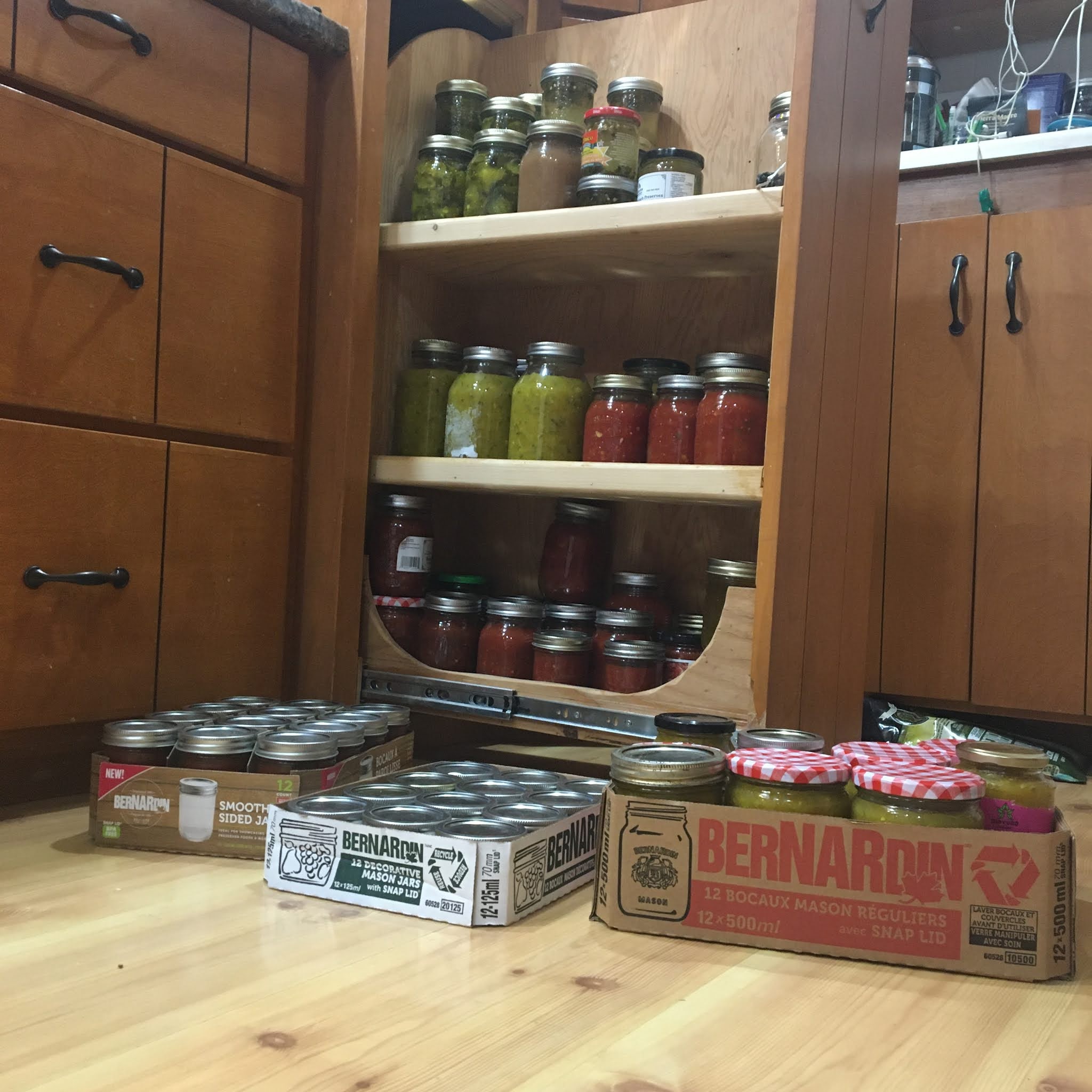
Every year I've canned something. When I was pregnant with four littles running around, it might have been one batch of salsa. Or throwing some beets in a jar with a sweet vinegar brine. But as the kids have gotten older, and my garden has slowly expanded, I've canned more things, with the intention of actually feeding us year-round. And the last few years have been pretty successful. I think I had buy tomatoes last year, at the end of the season to make enough salsa, but mostly it's items from our garden, put away for the winter, like a good little ant. 
And this year is looking pretty successful. Lots of relish made (probably too much), some new bread and butter pickles I'm trying out (ripple cut thanks to my mandolin- no big deal guys), and salsa. My garden is still pumping out tomatoes so I might try some simple canned, diced tomatoes, but we'll see. Still have my beets left to go, but those are good ones to do later. 
But I was thinking the other day about why I even bother. I have a Costco membership. There's no way that if I count my time (including inevitable clean up!), the jars, the produce, etc. it makes any fiscal sense whatsoever. And then I remembered that most of my life doesn't make a lot of fiscal sense. I raise pigs each year for our freezer, I milk a scowly Jersey, I raise her calf for beef, I grow chickens for meat and eggs, but I'm pretty sure I could make a lot more money buying all that food for cheap somewhere and working off the farm for a pretty little paycheque. So why don't I?
I know where those tomatoes come from and who picked them and if those people are living a healthy, fair life. I know how that pig was raised and that it rooted in the sods and had Jersey milk for breakfast. I know what the cow ate and how satisfying it is to watch her cream turn to butter before my eyes in the KitchenAid. There is no dollar figure for those peace-of-mind parts and that's ok. If it feels good and I'm able to do it, I will. And I gotta say, it feels pretty darn good. 

(I also couldn't figure out why I was running low on jars, when I haven't needed to buy any for years. Then I went to the freezer for a roast and saw my jars and jars of ghee and remembered where all my jars went. Ooops. Not a great year to run out, but a great reason to!)

Return to School

Well, by now the kids have completed two weeks of school and so far so good. I know parts of the world are really struggling with the virus, but we're so blissfully ignorant here, it feels ominous, but far away at the same time. The kids have done well to remember their masks (it helps that they need them on the bus), and don't really have much to say about any of it when they come home. Their stories are pretty normal and it sounds like the staff are doing an incredible job of making everything feel as business-as-usual as humanly possible. 

PEI is doing a really amazing School Food Program and it's a local chef prepping ingredients from local farmers and it's pay what you can, up to $5. I treated myself and bought the kids' lunches today. It's supposed to be PEI Beef burgers (I think they were squeezing in some lentils as well, but don't tell the kids.) so we'll see how that goes over. My prediction is that 3 of 4 will be really happy. Guess who the 1 unhappy camper will be. (hint: starts with a T)

Lucy's Awful Good Pumpkins 


Soon enough these'll be piled up at the farm gate, ready for sale!

Recipe 

I'm too tired this week to share an original recipe, but I've got a humdinger that we've been living off of a few times over the last month and I think everyone needs to know about it. Here's a link to the Lazy Genius Change-Your-Life-Chicken. We can't get enough. (I make a spice rub of random herbs and spices, including a little brown sugar that is different every time and never measured, so use some artistic license and make that part up). It's SOOOO good! And the PERFECT use of those darned ol' chicken legs!!!


Photo From Phone

This week's PFP is the boys at the Dunk River trail. It's one of the coolest trails on PEI (I think but I'm biased because it's just down the road) and it changes so dramatically with the seasons, but this time of year when everything is lush, a little overgrown and heavily laden, it's pretty magical. Accompanied by the imaginations of young boys, it's even more so. Every low hanging branch creates a tunnel. Every obstacle is keeping us from our destiny. Every side route, is a passage to safety. Every turn in the brook holds some mystery, likely an armed foe around the corner. I am doing my best not to take for granted these moments of wonder, curiosity and downright foolishness because I know one day I'll miss them.