Friday, September 4, 2026

Why Wendell Berry Mattered To Me

 As a young idealistic woman coming up in the 90s, there was a constant drumbeat in the agriculture world, meant to dominate our minds to the point of erasing any foolish notions of independent thought; HOW WILL FARMERS FEED THE WORLD?  

It came from every corner of agri-business, which then and now, is the primary driver of broad communications among farmers. Conferences sponsored by ag-chemical companies, speakers paid by fertilizer companies, displays of big shiny equipment at livestock shows, all of it heralding the challenge of this ominous threat of farmers being unable to meet their potential and leave the world in a lurch. Farmers particularly impotent without the miracles of the inputs and intensive management of the agribusiness overlords, offering "solutions" at every turn. 

In grade 12, I remember trying to write an essay for a 4H scholarship, given the topic of coming up with solutions for exactly how we could "feed the world". I don't remember if I won the scholarship but I remember struggling with the idea even then, despite having been immersed in the North American (false) dream of bottomless soils and endless yields if only we bought the right products. 

It wasn't long after that, that I encountered the work of Wendell Berry.  First, his essays and then later, his poetry. But it was his essays on farming that helped form the farmer I became and gave my weary mind a life raft to hold onto in the deluge of conventional, exploitive agriculture that has been the siren song of my upbringing in 4H and Young Farmers organizations. 

He was the first white, southern American, male farmer I had read who so eloquently captured the thoughts in my heart. The first farmer I heard make a sound case for small farms and vibrant rural communities based on respect for the soil and the forests and the wild places and the livestock and the people. He was the first to herald husbandry over science, to question the concept of efficiency over care and intuition. He called for farmers to be conservationists and to let the farm be the judge of its capacity to produce. 

He shook loose some ideas in me that had been tucked away and dismissed as too radical, too Luddite, too foolish and wasteful. He let me shake off this looming threat of letting the world starve, while emphasizing the very thing that had niggled at me the whole time; how we feed the world is the wrong question, the wrong challenge. We should be asking how farmers can feed their communities, their neighbours. And then how we grow more farmers and encourage farm kids to farm. 

Once, after I was fully entrenched in his essays, I then learned that farmers could be poets, the most beautiful of poets. He was my agrarian Mary Oliver and I returned to his words again and again, comforted by a kindred understanding of the smallness of our place in the world, but our role as caretakers and stewards of our land, our communities, our families. The real magic of Wendell Berry was his ability to put beautiful words to harsh criticism in such a thoughtful way that it didn't feel harsh at all. It wasn't urgent and pushy and loud, but it was timely, timeless, important, relevant and thought-provoking in a way that we too often miss the mark on these days of quick, snappy TLDRs. 

To me, Wendell Berry's voice was a calm and quiet antidote to the noisy chanting, goading and belittling of Big Ag. Even now, I feel like I can feel him gently encouraging agrarian thoughtfulness with a "Steady on.  Steady on."


Tuesday, April 1, 2025

Party for Two

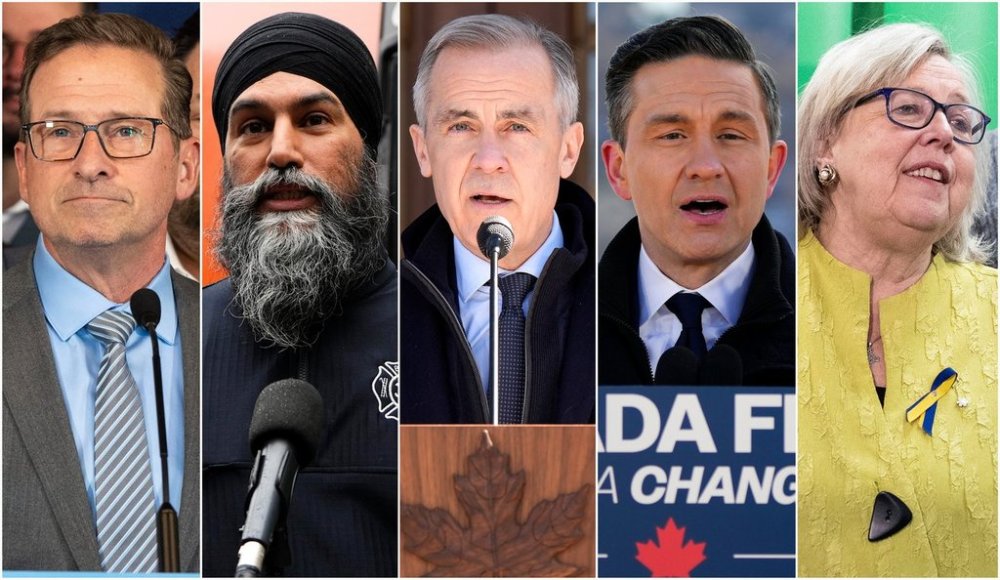
                    Canada federal election 2025: Where the leaders are on Saturday, March 29 –  Winnipeg Free Press

When I was in Tennessee last fall, I was generously hosted by an older fella who proudly showed me around his state, his cattle and his business. He was gregarious and warm and lively. He also wore a brightly coloured, large lettered Trump shirt and did not shy away from talking politics with this nose-ringed, organically-minded, east coast Canadian. I love a political discussion so we got along quite well and one thing he said has really stuck with me.

    “There was a phrase I heard that said, ‘If you’re under 40 and you vote Republican, you have no heart. If you’re over 40 and vote Democrat, you have no brain.”

As someone just barely tipped over that maybe arbitrary precipice, I’ve been considering what it means for me. For those lifelong card-carrying partisan party die-hards, the idea that affiliation is so loose as to be influenced by something as passing as age, this concept may be borderline offensive, but I’d suggest that for a large portion of the population, some version of this may be true.  It’s true for me, in that I have grown more fiscally conservative as I age and I do look more critically at some of the social programs that I would have previously vocally defended. 


But given todays global political climate, I think this quirky phrase bears a reconsideration. How to decide when brain or heart should lead is a question we could ask ourselves about any decisions, but especially pertinent now as things feel more unstable and unknown than ever. 


But maybe choosing between the two isn’t the item of importance here. Maybe the real story is acknowledging that both are important and that having a multitude of voices is what makes up a democracy.  Maybe the real moral of the quirky phrase is that surely we can recognize within ourselves that there is value in all perspectives and villainizing one side or the other will only come back to bite us, as individuals and as part of a larger community. 


I know we’re being pushed into corners that want us to choose, corners that say “this is the heart-leading corner. Get in here with the rest of the people who care and have compassion and empathy.” Or, alternatively, “come to the corner of brain-leading. We make the best decisions and in the end, all of this clever strategy will pay and we’ll all be better off.”

And between the corners is a space where lots of people would like to go, but it’s impossible to rest there with all the screaming and yelling from the corners on both sides. “You can’t have it both ways!!! Take a side! Take a stand!”

And as long as we’re all yelling at each other, neither side ends up “winning” and instead global powers slowly grab more power from the powerless and billionaires find ways to grab more money. 


Instead of dividing yourself into a group that is wholly voting against something rather than for anything, try finding a middle ground with your neighbour on the “other side”. Listen with a curious heart and a vulnerable brain and remember that above all else, we’re all just humans who want love, security and good health. And if it feels like the chasm is too wide and deep between how we get there, consider that the other side feels exactly the same. They feel similarly threatened, unsafe, distrusting and anxious. Surely no political opinion is worth breaking relationships over when in the end, it comes down living in the same community, the same family, the same workplace and being there through both real hard times and true joy, together. Don't burn a bridge over a man in a suit when in the end, it will come down to a friend on a porch.  


Tuesday, November 5, 2024

Our Obsession with a "Good Deal"

Who doesn't love a deal? I spend probably too much time on Facebook marketplace, scouring the Island for good second hand items. I occasionally purchase books or games or craft supplies from Amazon when I can't find them locally. I get all the same ads that everyone else does for cheap clothing and consumer goods from China. And if I work hard enough I can convince myself that I deserve to save a bit of cash as a hard-working, well-meaning person who is noticing a tighter pocketbook and a higher grocery bill. 

Let me interrupt this little celebration of good deals with a seemingly unrelated story. 

The Uyghur people are a minority population in China, mostly of Muslim faith. They have their own language and culture and while they have existed in the north western region of China, Xinjiang, they identify more closely with more central Asian nations.  

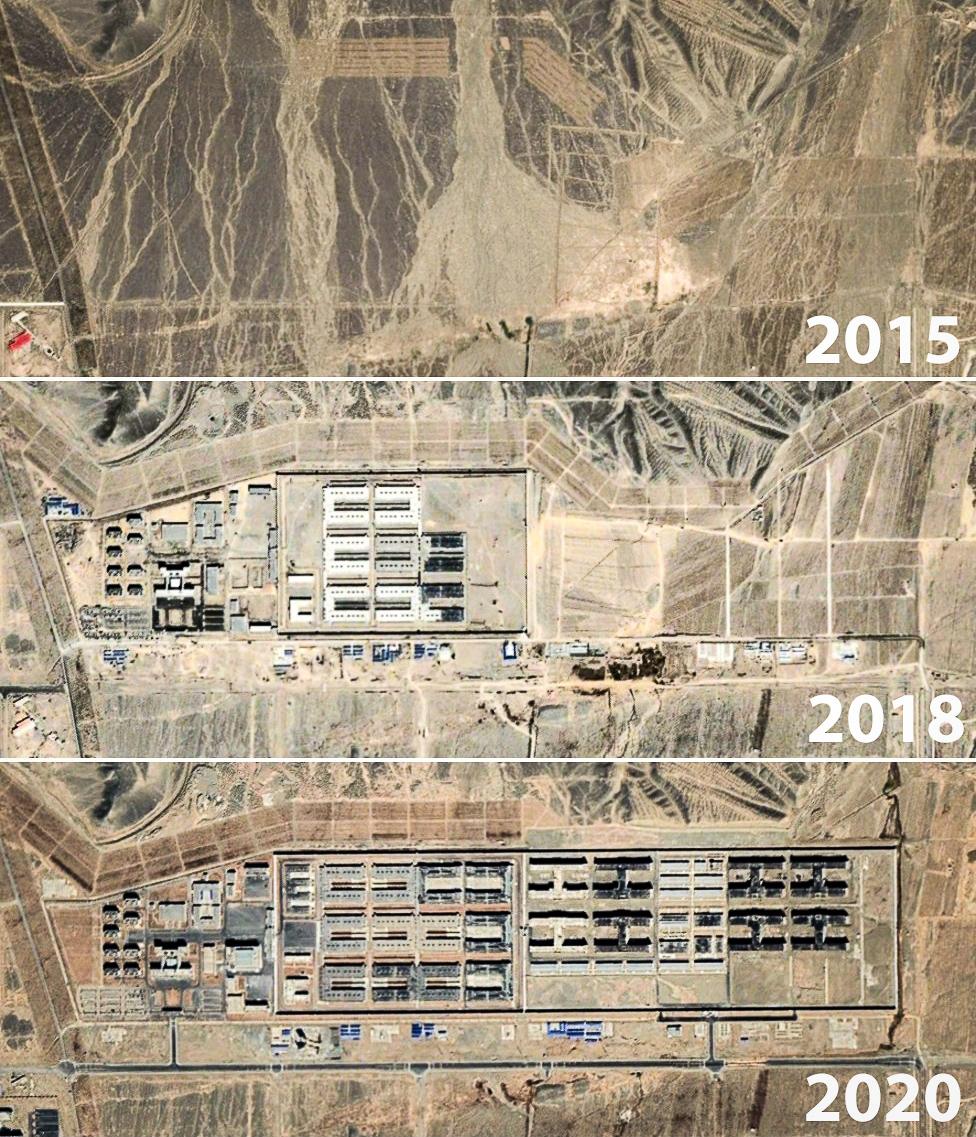
China doesn't like the Uyghurs. There have been several human rights groups identify drastic crimes against humanity, including sterilizing Uyghur women, separating children from their families, attempting to break cultural traditions and putting more than 1 MILLION Uyghur people in "re-education camps".

Satellite images show the rapid construction of a large camp near Dabancheng in Xinjiang
Satellite images show rapid construction of camps in Xinjiang, the home region of Uyghur people. Photo from LA Times.https://www.latimes.com/business/story/2023-06-15/temu-sells-products-linked-to-forced-labor-in-china
The camps are not just housing and detention. Those who have escaped have reported physical, mental and sexual torture. But there are also factories in the camps. The factories produce clothing and consumer goods made for fast fashion retailers like Temu. 

Xinjiang is a major cotton-growing region, but primarily harvested by forced labour. The US even banned cotton from Xinjiang due to human rights abuses related to the labour conditions of harvest in the region but the Chinese companies have figured out various ways to ship smaller amounts (but many of them) to avoid triggering the $800 threshold that requires border protection and investigation. 

Most human rights organizations say that it is not a difficult assumption to make that between the cotton harvest and the slave labour in the factories, China is using the Uyghur people to manufacture the cheaply made goods coming from retailers like Temu. 

So back to a good deal. If we are a global people and what affects us, affects everyone, how good does our cheap deal look now? If we're dismayed at the state of our population, our mental health crisis, our opioid epidemic, our housing crisis and our 'cost of living', does 'saving money' by supporting companies like Temu, really help us as humans?  Does getting that cheap knock off sweater from Shein that will last one season, really elevate our energy in the world, as a human sharing the planet with other humans? 

Not to mention all of the creators on Etsy whose beautiful hand crafted goods are being stolen and remade in China by these "re-education camps" using fabrics that are not safe to wear anyway (so just imagine the conditions in which they're made).

I know, I know, everything is expensive now and we donate to charities and we pray for world peace, what difference can our few purchases really make? Aren't there organizations and government agencies responsible for managing these problems? 
Yes. But also we are responsible for managing how we spend our precious dollars and understanding where our money goes and how the things we buy are produced, grown, flown and shipped. We need to stop chasing the race to the bottom on all fronts.  Cheaper food!! Cheaper clothes!! Cheaper building supplies!! Cheaper furniture!! Cheaper cars!!  We have immense privilege as North Americans that most of us are justifying squandering away in favour of filling our lives with cheap shit at the cost of other people's lives.  

Stop supporting Temu. Our dollars will talk louder than any slow government can.

Thursday, April 11, 2024

Brazilla vs Kong


If Brazilian ag was a creature, I picture it as Godzilla, emerging from the ocean, preparing to eclipse a nearby North American city, as seen in the movies. Maybe it's a friendly Godzilla, well-intentioned and not dangerous at all. But there’s no denying its scale and strength. And at this point we don’t even know how much is still hidden under the water. Each year, it’s still growing in production and exports, from 20-40%, depending the commodity.


Before I went to Brazil, I hadn’t spent a lot of time thinking about it. I was worried about the Amazon and knew that soybeans and beef were a big deal there and that was about it. None of that was misplaced but there’s a lot more to it, obviously. For scale, Brazil is roughly the same size as the contiguous US, or Australia with equally varied landscapes and growing conditions, although proximity to the equator means they can achieve two harvested crops per year, plus some grazing in between (following under-seeded corn to grass).  It wasn’t unusual to see a combine harvesting soybeans, followed closely by a corn planter. It was also common to see a crop in all its various stages within an hours drive. Soybeans being planted, harvested and at every growth stage in between. The lack of highly varied seasons makes for accelerated rotations that can do a whole lot more than us northern hemisphere folks limited by winter.


While Brazil has historically been through a roller coaster of export-driven markets from brazilwood to coffee to sugarcane to rubber, it’s been a roller coaster that has been steadily climbing up a hill with no great downfall anywhere in sight. Large scale agriculture there really only took off in the 1970s so it’s a relatively young country in the big ag world and it has taken some valuable lessons from those “developed” countries who are now trying to recover from decades of soil exploitation. The ground is rarely bare in Brazil, partly due to those two crops per year, but also because there is an acceptance that cover makes sense. They have put all their eggs in one particular grass basket which seems like a bit of a vulnerability but the Brachiaria variety of grass resists pests and grows well under Brazil’s conditions. It is sensitive to herbicides so requires lower doses in a no-till system and does well as fodder for cattle.  There is quite a robust network of researchers and extension agents for farmers at all scales and the trust and respect between the two seems very strong. 


The rules around deforestation are clear but enforcement may be spotty and it depends on who you talk to when it comes to the perception of fairness. The policy makers are clear on the rule being 20% of any private land holding must not be cut down, which is to say that 80% can be cleared.  Within the bounds of the Amazon, those numbers are reversed and it is 80% of any land holding must be maintained and not cut down. The governor claimed that penalties for breaking these rules were very severe, from large fines up to jail time.  But this also means that 20% of deforestation in the Amazon region is perfectly legal.  More than one farmer, when pressed about international pressures in regards to deforestation in Brazil said, “Bah, all the rest of you already cut your forests centuries ago, it’s our turn.”  One cannot help but be simultaneously dismayed and empathetic with this perspective. 


As a country that can grow a full sized hardwood tree for timber in 7 years, compared to our 45 years, can harvest two cash crops in one year and is still continuing to increase exports and yields year over year, Brazil could be the biggest ag-Godzilla the world has ever seen. But with great power comes great responsibility and to turn a blind eye to the crisis of the Amazon in favour of focusing on productivity, no matter how successful, is to ignorantly accept the “if I’m going down, you’re going down with me” adage, to detriment of us all. 


In a world convinced that it will be unable to feed itself soon (totally false but propped up by the “science” and the deep pockets of chemical and fertilizer companies), Brazil is doing its damnedest to fill the gaps and as it stands today, will continue to grow in leaps and bounds for years to come. By that measure, Brazil will soon reign supreme but by failing to recognize its very strong dependance on tenuous inputs and economies of scale that are exactly as efficient as they are vulnerable it will be very interesting to see what it looks like in a couple decades from now. Will Brazilla (see what I did there?) become the force that dwarfs King Kong (the other major producing and exporting countries)  or will they fall on their sword of currently-justified hubris? 


(Not Godzilla, just an ANACONDA that was in the same river I snorkelled in!! Glad I didn't see it while I was in there with it!!!)


Thursday, January 11, 2024

'Nuffin' to see here

 I thought I had worked through all my insecurities when I primed myself up to apply for a Nuffield Scholarship. It took me several months of thought and internal debate. Months of trying on the idea of travel and time away from the farm. It was the inspiration for my solo bike trip to the Maggies, proving to myself that I could do scary things. I filled several pages of a couple journals, working out all kinks in my confidence, convincing myself that I was worthy, clever enough, experienced and not just doing it to prove  to everyone, but especially me, that I am a legitimate farmer. 

That was 2022, 2023. Yet here I am in the early days of 2024, making real travel plans to places where I'll be sitting down with folks who might ask me questions that I probably should know the answers to and I'd rather crawl under a nice wide tree canopy and stay there. 

As a young woman, in the final days of waiting for my first baby to arrive, for some reason I became fixated on having enough receiving blankets, those soft flannel, rectangular burp catchers and baby wrappers.  My recurring nightmare in those last days was coming home from the hospital to not having any receiving blankets. Laughable even then, in the tornado of hormones and insecurities. 

And now, in the final days of making plans, spending money, booking flights, finalizing connections here I am, worried about not knowing the answers to questions like :

PEI's average annual rainfall, our farm's soil type, the variety of clover in my pasture mix, seeding rates for everything, the number on the side of our grain drill, how many horsepower our tractors are, the current price for beef on the commodity market, average yield for grain corn in the Maritimes, going price per bushel for every crop, organic acres on PEI, and on and on. 

The kind of easy, friendly chatter that creates a comfortable bond, a reciprocal sort of agreement between farmers that we're all in this together. But I don't know those things, not off hand. I'm not great at farmer small talk at all.  I could easily find the answer to all those things in a matter of minutes, mostly by mining the mind of my very legitimate farmer husband. He sits comfortably in a room of farmers, able to chit chat with any of them. 

And yet, I know both of us would claim I'm the people person. But farmers aren't regular people are they? They carry a library of facts that they've built over generations of working with the elements and they carry a certain reverence for those in the same boat, and a very quiet surprise that there are those who don't carry the same library. 


I know by the time this is over, those questions will feel as silly as a deficiency of receiving blankets but right now I'm entirely caught up in the minutiae of human relations at a farm level. I thought maybe putting this out in the world, it would help get it out of my mind and set me free, but maybe writing down just a few of those questions that so many farmers just unconsciously learned as barefooted kids only highlighted my foolishness. What am I doing on this adventure? How did I think having the Nuffield name to open doors would also lend me credibility when it comes to relating as farmer to farmer over a kitchen table? They'll see through me so fast, know that I love cattle, but don't understand the cost of production like I should, don't appreciate the depth of the current reliance on synthetic fertilizer in our globalized food system, don't know the first thing about equipment maintenance, am as debt-averse as it comes, am often confused by the lingo at annual accountants meetings, etc. 

How did I fool Nuffield Canada so thoroughly that I'm at this point in the game?  

And don't worry, I know I've got lots going for me, and that these things won't matter that much. It's more of a sign of this becoming real, this hyper fixation on foolish, irrelevant things.

Mostly I'm posting this so that future scholars who get themselves to this point, can see that they're not the only ones.  And for me, to read later on and remind myself how far I've come. I'll probably never remember the model number of every (any?) tractor we own, but I can talk to anyone and my Mom always said I've got the kind of smiling face that makes people feel comfortable, so I'll just rely on that I guess? *laughing/crying/mostly laughing I think*


Quite a post for my first Nuffield one eh?? Inspired to follow along or WHAT!? :)


Monday, April 24, 2023

When The Opposite of Popular is Depopular.

 Renting hens is far from central to our business, but it is the most profitable thing we do. And even at that, it's not a make or break part of the farm.  But it does fulfill a value I have of promoting food awareness and food security. It brings agriculture to those who would otherwise not know where to start, not have the opportunity. It builds confidence in people to try things like gardening, canning, try other livestock, start to notice the difference in the quality of food. It gets people thinking about the food their food is eating, which is something most people don't do. 

Yes, renting hens is a cute story and a cool side hustle, but last year we opted not to do it because of the new threat of avian flu. 

I had decided that this year, I would give it a go, on a smaller scale. Partly because the demand was SO high and because there haven't been any cases of the flu here in domestic birds. There were lots of wild bird cases in the sea around the Island last year, but none managed to infect the thousands of poultry that live here. So I felt like maybe it was ok to give it a try again. 

Until we had a little visit from someone representing the perspective of the egg producers board. It was a very cordial visit and ended on good terms but it was clear that how we're farming is a threat to the livelihood of others, farming differently.  We're within a couple kilometres of a couple egg farms who would be affected if my farm was affected. Although, similarly for me, should they get it. 

And when I say affected, they could be forced to depopulate (euthanize) their flocks. Same as me, should they get it. Or similarly, if one of my rental hens should get it, it could be decided that my flock is a threat, even if the rental hen is in Souris and then we're all 'depopulating' (what an odd euphemism). 

While renting hens may not be a cornerstone of our farm profitability, making feed is, and that business could be halted if avian flu is found here due to vehicles being unable to move on and off the property. Kind of hard to sell feed if it can't leave the grounds. Let's not even begin to talk about all the folks who come here to get their feed for their backyard hens. 

So here I am stuck between a rock and a hard place. The pressure and risks of avian flu which may or may not happen and the potential to introduce the love to hens to a bunch of new folks this summer and foster a love of real food connection. 

I lean more and more into libertarianism as I get older and if I lived in the states, I'd likely be laughing in the face of something like the egg board, renting more chickens than ever just out of spite. But I want to be a good neighbour. I want to ensure we keep our feed business going. I don't want to feel like a threat to an entire commodity. I also want chickens to live lives outdoors. I want folks to experience cracking a still warm egg for breakfast. I want kids to train a chicken to follow them around. I want folks to ask what's in their chicken feed and care about the answer. 

I can't help but wonder if our egg and chicken industry in North America is so incredibly vulnerable to a disease because we've built it around breeding of chickens that are designed for one purpose and have no ability to cope with exterior threats? So much so that the barns are airtight, light-tight and so biosecure that workers have to change clothes to go in. What a surprise that they might be vulnerable to different pathogens. 

I suspect that Avian Flu will become like Covid is for us now. Always in the background, a real threat to some and less concerning to others. Does it mean I will never rent hens again? I'm sure some would hope that would be the case. 

So what do I do?  Forego the few thousand dollars and share my values in other, less effective ways? Or snub my nose at the 'guidelines' and my neighbours and send my little hens across this sandbar, spreading the chicken love, one feather at a time?


Friday, March 31, 2023

Duplicitous Denny

In college, at the end of the year, we'd have a night called "Drink the Pub Dry" in the name of clearing out the fridges for the season, in the form of cheap liquor. 


In the agricultural debate that the PEI Federation of Ag hosted this week in the run up to the election, I was reminded of that night, for the first time in years. I listened as my premier bragged about the time he approved a Pump the Dunk Dry during a "drought that was as high as it's probably been" for farmers whose irrigation permits had been 'shut off'. He foolishly went on to compare the sprinklers being used in downtown Charlottetown to the watersheds of the potato belt here in "the middle part of the province".

Denny King's own civil servants had to sit in committee and answer questions from concerned MLAs following that decision by the premier, that he was so proud of and those very civil servants agreed, time after time, that it was indeed detrimental to the watershed, it was against the rules and was a bad decision. 

https://www.saltwire.com/atlantic-canada/news/dunk-river-pumping-would-have-contravened-water-act-regulations-pei-civil-servant-tell-committee-100574243/
Why the needs of a potato crop would be put before the needs of residential wells or the water needs of a livestock farmer would be difficult to fathom anywhere else in the world. But not here in the Potato Republic. Apparently thats exactly the kind of thing that you can be so proud of that it's central to your debate strategy against the other party leaders in a provincial election. 

My main concern is not even the rash decision or the bragging about it. My primary frustration with this scenario is Denny's duplicity. You can be sure that his debate notes (spoiler, he doesn't really have any because he's so condescendingly confident and cocky) for the Environmental Forum didn't mention this wonderful decision he's so pleased to take responsibility for. Pulling from the handbag of tricks of the greasiest politicians of yore, King will say whatever it is that he thinks the people he's talking to want to hear. This was evidenced when he was recorded making statements about the drag and trans community, or even, for heaven's sake, CBC radio! He had to backtrack and pretend that they were out of context and apologize. But we all know that he is that kid in high school, so eager to be voted onto student council, that he'd sell cigarettes to the smokers, while simultaneously helping to draft the petition to get rid of the smoking area with the try-hard kids.

I started this election as a sincerely undecided voter, but it's become increasingly clear to me that the current government has no interest in my opinion, my water security, land use, reforestation or any other number of topics relevant to voters here on PEI. To our faces, maybe, but once we're out of earshot, it's just an eye roll and a shake of the head, a dismissive snort and back to the game of selling PEI and her resources to the highest bidder and the best lobbyist.

PEI is not a pub to be emptied of the old booze, and we're not a bunch of college students, all too eager for cheap drinks that we'll swallow whatever drivel you're feeding us.